Nader Karayanni
Your guide for choosing AI for medical record reviews
TL;DR – The key criteria for choosing an AI for legal medical record reviews and chronology are: Accuracy, Context Awareness, and Security.
In this blog, we explain how to vet your options, demonstrating why our platform at newcase.ai makes for the best software for reviewing medical records and generating chronologies for complex legal cases.
Key Takeaways:
Accuracy: Research has shown that having a user-in-the-loop increases accuracy from 73% to 99.5%.
Feature set: an AI-native platform should allow you to search across all medical records to ensure you never miss a fact.
Context awareness: Ask your vendor—how does the chronology change for different cases? Their approach must account for case-specific details to identify relevant insights.
Security: Ensure the software is HIPAA and SOC 2 Type II compliant and AI providers with Zero Data Retention.
The Landscape: How to choose AI for medical record reviews?
In today’s landscape, many software tools promise to automate your medical record reviews. It is important to learn how the software works.
What are its limitations and powers? We must educate ourselves to ensure we can vet the providers and options in the right way, adapting to leverage their potential while eliminating risk from the process.
In this blog, we cover 3 topics that are essential for a successful adoption of AI for medical record reviews: Accuracy, Quality/Feature-set, and Security.
1. Accuracy
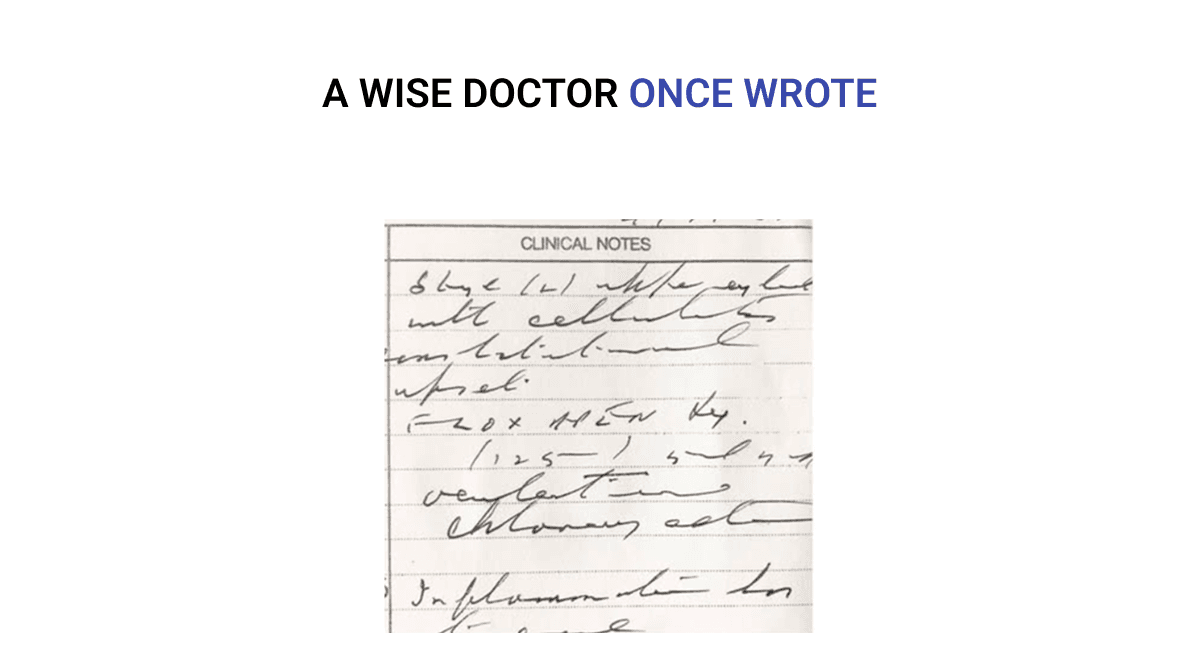
Can AI capture handwritten notes and messy records?
There is no AI solution that can capture all the messy information 100% accurately from medical records. If you’ve seen the handwritten notes on some of them, you’d understand why.
How can we trust AI given it can’t extract information with 100% accuracy?
A robust solution such as newcase.ai shouldn't guess; it should declare its confidence level.
By flagging low-confidence data (like messy handwriting) for human review, the system allows your team to intervene when needed. This "Human-in-the-Loop" approach ensures you get the speed of automation on straightforward pages without risking accuracy on complex ones.
What are the advantages of having a "Human-in-the-Loop"?
Research with Harvard Medical School has shown that having a user in the loop increases accuracy significantly—jumping from 73% (AI only) to 99.5% (HITL). This ensures that demonstrable authority overcomes the inherent deficits of generic AI models.
2. Quality and Feature-Set
A good nurse creates a chronology based on the specific theory of the case. Your AI tool must do the same.
Comparison: Generic AI vs. Specialized Legal-Medical AI
Generic AI | newcase.ai - Purpose built for legal-medical reviews | |
|---|---|---|
Context Awareness | Treats all jobs equally | Case-specific insights (e.g., MVA vs. Malpractice) |
Hallucinations | High risk; "makes up" facts to fill gaps | Links every fact to exact page citation |
AI-Native Capabilities | Outputs rigid final results (e.g. PDF or table only) | Filtering the chronology with natural text & deep contextual search |
Data Privacy | Data is often used to train models | SOC2 / HIPAA Compliant / Zero-Retention |
Context Awareness: How does it take into account the case’s specific context?
If you run the same set of medical records through the tool for two different cases, the output should differ.
Example:
Case A (Medical Malpractice/DKA): Blood sugar levels are critical evidence. The AI must highlight every glucose reading.
Case B (Slip & Fall / Orthopedic): Blood sugar levels are largely irrelevant noise.
The Test:
Ask your vendor, "If I run the same records for a diabetes malpractice case and a broken leg case, will I get the same summary?"
If the answer is "Yes," the tool is not context-aware, and you will waste hours editing out irrelevant data and missing critical insights.
Rich AI capabilities: What can an AI-Native solution offer?
Purpose built AI platforms move beyond static PDFs. They allow you to interact with your data using natural language.
Instead of manually scanning rows of data, you should be able to filter the chronology in natural language: "Show only entries related to glucose readings" or "Filter for all nursing notes regarding pain management."
Searching medical records: How to overcome complex terms and synonyms?
Standard "Ctrl+F" search fails in medical records for two reasons: unstructured data (like handwriting) and complex medical terminology. A keyword search for "Heart Attack" might miss vital records that mention "Myocardial Infarction"—terms that are clinically equivalent but linguistically different.
An AI-native approach utilizes Deep Contextual Search to understand the meaning behind your query. Detecting synonyms, deciphering messy notes, and linking related concepts. Ensuring you never miss a fact.
3. Security: How to ensure the software is compliant and secure?
Secure platforms like newcase.ai must be strict with a clear list of checks to ensure security and privacy.
When you upload medical records to an AI, you are transmitting PHI (Protected Health Information). You must interrogate their infrastructure, specifically regarding the Large Language Models (LLMs) they use.
The 3-Point Security Checklist:
SOC 2 Type II Compliance: Is the vendor audited to prove their security controls?
SOC 2 reports, as defined by the AICPA, evaluate controls related to security, availability, processing integrity, confidentiality, and privacy. AICPA – Understanding SOC 2HIPAA: Is their entire processing workflow aligned with HIPAA regulations?
The BAA Question: Do they have a signed Business Associate Agreement (BAA) with their LLM provider? (e.g., Google, OpenAI Enterprise)
Note: You can always ask the vendor to sign a BAA with your firm. If they hesitate, their data isolation practices are likely insufficient.
For HIPAA covered entities: The U.S. Department of Health & Human Services (HHS) explicitly states that cloud providers handling encrypted PHI are still considered Business Associates and must sign a BAA, even if they cannot view the data:
“A cloud service provider is a business associate if it creates, receives, maintains, or transmits ePHI… even if the CSP processes or stores only encrypted ePHI and does not hold the decryption key.”
— HHS Office for Civil Rights - Guidance on HIPAA and Cloud Computing
Summary
Choosing the right AI for medical record reviews is not just about automation—it is about finding a partner that understands the stakes of legal work. A generic tool might save time upfront, but the cost of missed facts or security risks is too high.
newcase.ai is purpose-built to address these challenges. By combining 99.5% accuracy via Human-in-the-Loop workflows, case-specific context awareness, and uncompromising security, we provide a solution that law firms can trust.
Are you considering AI for your medical record reviews? We invite you to contact our team to see our platform in action and discover how specialized legal AI can transform your case preparation.
Citations & Resources
Regulatory Context: HHS Guidance on HIPAA and Cloud Computing
Clinical Terminology Reference: Myocardial Infarction (Heart Attack) — NCBI Bookshelf
https://www.ncbi.nlm.nih.gov/books/NBK607442/