Courts Fined Lawyers $145K for AI Hallucinations. Here's What That Means for Your Firm.
Category: Legal AI Meta description: Courts fined law firms $145K for AI hallucinations in 2026. Here's why it's an architecture problem — and what litigation teams need to check before their next filing.
In March, a partner at a mid-size litigation firm submitted a brief citing three cases. All three were fabricated. The AI tool that generated them had a 97% accuracy rating on its own benchmark. The court wasn't impressed.
Sanctions: $30,000 per violation. Public reprimand. Mandatory AI literacy training before the next AI-assisted filing. The firm pointed at the associate who ran the query. The court's order pointed somewhere else — at the tool's architecture. Not user error. Tool design.
That's what $145,000 in Q1 2026 sanctions is actually about. And it's the question every litigation team needs to answer before the next brief goes out.
The Same Story, Twelve Times
Q1 2026 produced a recognizable pattern across a dozen sanctions cases, spanning federal district courts and state appellate proceedings, solo practitioners and regional BigLaw offices. In each case, an attorney used a general-purpose AI assistant to research case law or generate citations. In each case, the tool produced something that looked like a real citation — proper format, plausible parties, believable docket numbers. In each case, the cases didn't exist.
What's shifted in 2026 isn't the hallucinations themselves — those have been documented since 2023. What's shifted is how courts are interpreting responsibility. Early rulings treated these incidents as individual attorney failures: a supervision problem, a verification problem, a failure to check. The emerging standard asks a harder question: was the tool appropriate for this task at all?
Several Q1 orders use the phrase "architecturally insufficient for work requiring verified citations." That framing is deliberate. It moves the conversation from what the lawyer did wrong to what the tool was designed to do — and those are very different conversations.
Two Kinds of AI
Most attorneys working with AI tools today are using one of two fundamentally different architectures, though the distinction rarely appears in a vendor's marketing materials.
General-purpose AI assistants — the category that includes most consumer and enterprise AI tools — work by predicting the most plausible next sequence of text based on patterns in training data. Ask one to find a case on implied warranty doctrine in product liability, and it generates text that looks like a case citation: correct jurisdiction format, believable case name, plausible year. It has no live connection to any legal database. It cannot check whether the case it named actually exists. Its output is a high-confidence prediction, not a retrieval.
Think of it this way: a seasoned attorney who's read thousands of briefs could probably generate a convincing-looking fake citation from memory. They know what citations look like. That doesn't mean the case exists.
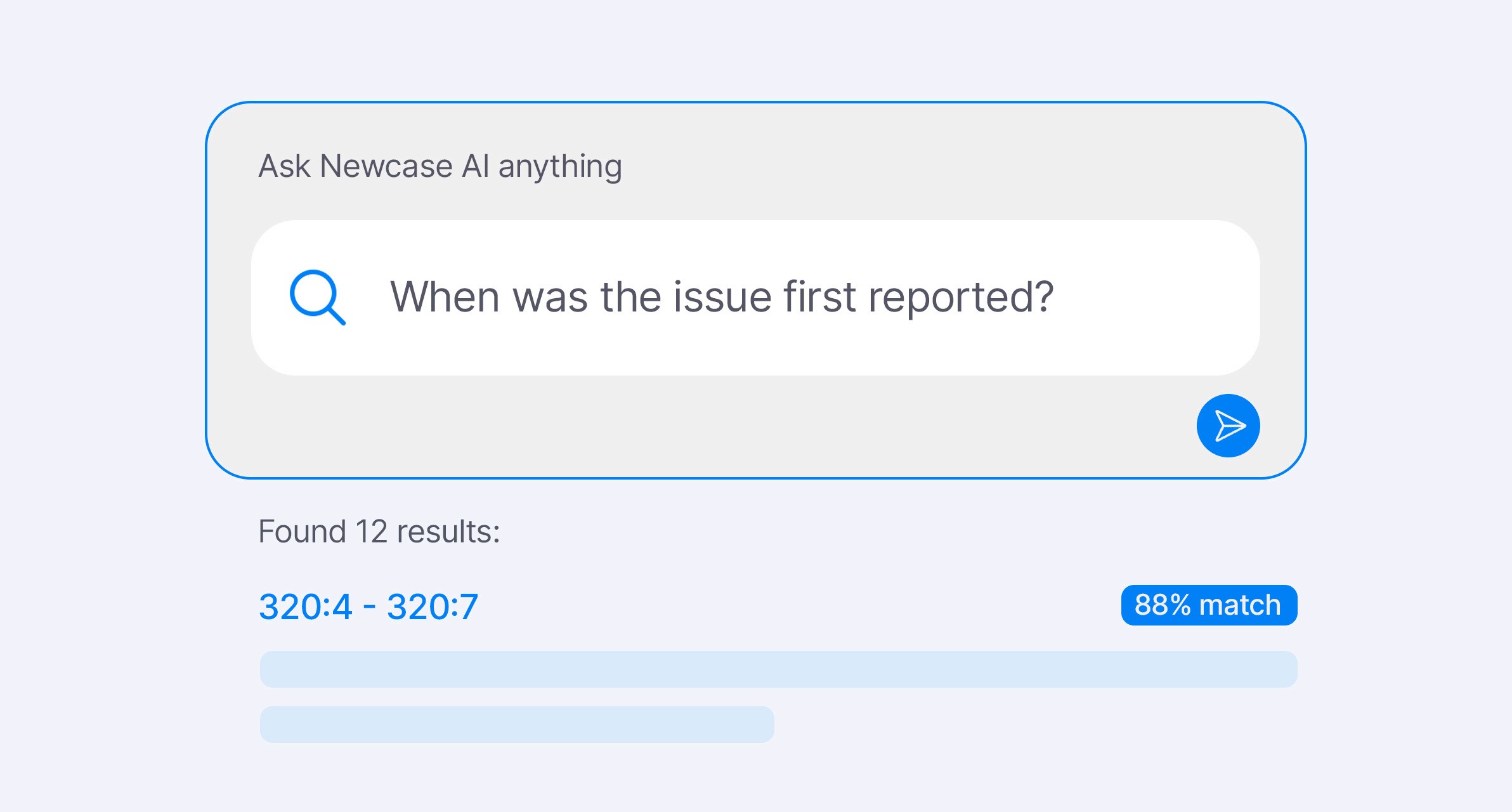
Retrieval-grounded systems work from the other direction. Instead of generating from patterns, they search a defined corpus of verified documents and build their output from what they actually find. Every summary point connects to a source. Every citation carries page-and-line references. If the case isn't in the corpus, the system doesn't invent one.
The implications for litigation work are significant. A retrieval-grounded deposition summary gives you every key admission, every contradiction, every relevant passage — sourced to the exact page and line where it appears in the transcript. You can verify it before it leaves the firm. A generative summary gives you fluent prose that may or may not reflect what was actually said.
What "Reasonable Inquiry" Looks Like Now
Professional responsibility doctrine is still catching up to AI adoption, but the direction is clear. Multiple Q1 2026 rulings reference "tool selection" as a component of due diligence. The argument: if a tool is architecturally incapable of producing verified output, choosing it for citation research isn't just a verification failure — it's the failure. Checking the outputs afterward doesn't rehabilitate the choice.
For litigation teams evaluating their AI stack, this makes the checklist concrete:
Does the tool retrieve from verified sources, or generate from training data?
Does every output include traceable citations — page-and-line references you can verify independently?
Is it purpose-built for litigation, or a general-purpose platform adapted for legal use?
What is the data retention policy for client documents?
That last item is worth flagging separately. Several state bars have issued guidance suggesting that using AI tools which retain or train on client data may constitute an ethical violation independent of accuracy concerns. Zero data retention isn't just a security feature — it's becoming a compliance baseline.
What Is an AI Litigation Intelligence Platform?
An AI litigation intelligence platform connects depositions, case documents, expert testimony, and case facts into a searchable, verifiable intelligence layer. Unlike general-purpose AI assistants, it retrieves and organizes information from actual case materials — it doesn't generate from probabilistic patterns. Every output traces back to a source document with page-and-line citations.
How Accurate Is AI for Legal Document Review?
Accuracy depends on architecture. Generative AI tools can produce outputs that appear accurate while containing fabricated details — even tools with strong benchmark scores. Retrieval-grounded platforms built on verified document corpora deliver consistent, verifiable results. Newcase.ai was benchmarked against 100,000+ manually reviewed pages before deployment, and produces deposition summaries with page-and-line citations that can be checked line by line before anything is filed.
What Makes Newcase Different from Other Legal Tools?
Newcase is purpose-built for litigation — not adapted from a general-purpose AI platform. It operates on retrieval-grounded architecture, surfacing facts from your actual case documents rather than generating plausible text. It applies zero data retention, so client documents are never stored or used to train external models. And every output includes page-and-line citations, so any fact can be traced to its source before it leaves the firm.
The Architecture Question Is Now a Risk Question
The Q1 2026 sanctions aren't a story about careless lawyers. They're a story about a category of tool being used outside its appropriate scope — and courts beginning to hold firms accountable for that mismatch before the filing date.
The litigation teams navigating this well have made one concrete shift: they stopped using general-purpose AI for tasks requiring verified accuracy, and moved to litigation intelligence platforms built on retrieval-grounded architecture. A 300-page deposition summarized in 25 seconds, with every summary point traceable to a specific page and line, is court-ready in a way a generative summary is not.
The emerging standard is clear: Human + AI — not AI instead of human. The tools that meet that standard are built to sharpen attorney judgment with verified intelligence, not to replace research with confident-sounding output. Firms that resolve the architecture question now, before a filing creates an issue, are building something more than compliance. They're building a litigation intelligence infrastructure that compounds over time.
Every deposition summarized with page-and-line citations. Every expert cross-referenced against prior testimony. Every document processed through a retrieval layer that surfaces contradictions rather than generating comfortable narratives. That's what it means to never miss a fact.
Book a demo to see how Newcase works →
Newcase is the AI Litigation Intelligence platform that connects depositions, attorney strategy, expert testimony, and case facts into a single searchable intelligence layer.