
Nader Karayanni
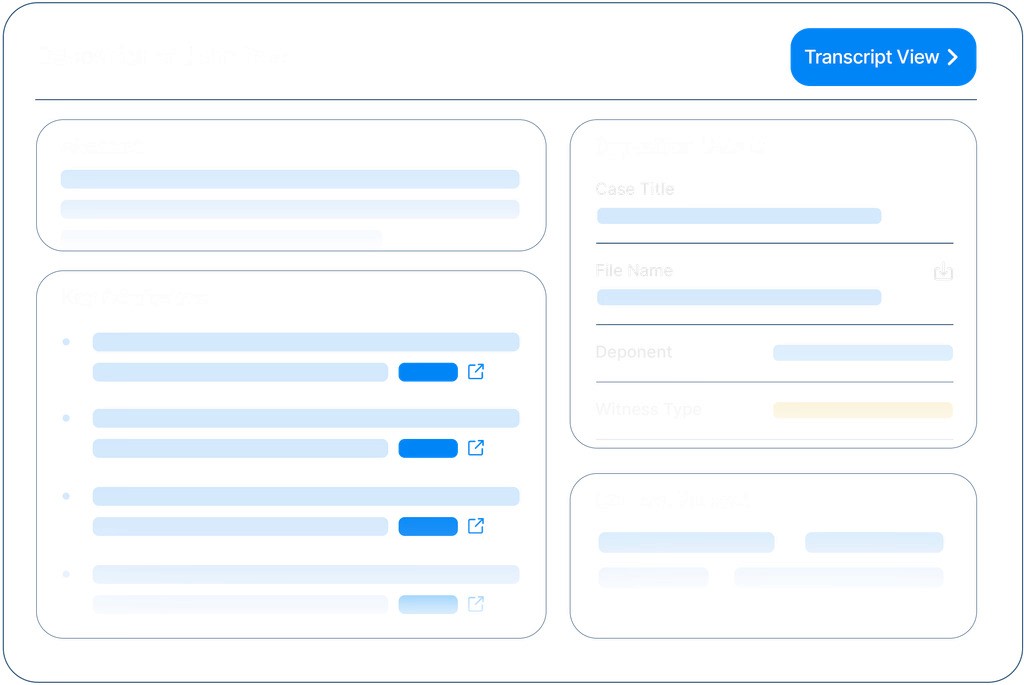
TL;DR – Summarizing a deposition is useful. Analyzing it is different. True deposition intelligence only emerges when testimony is read against the complete set of case records and testimonies. At newcase.ai, we deliver that intelligence proactively — frictionless, embedded, and context-aware.
The Difference Between a Summary and Intelligence
A transcript summary tells you what was said.
Deposition intelligence tells you what it means — in the context of your case.
Contradictions with prior testimony. Key admissions that corroborate or undermine your theory. Gaps that only surface when a witness's words are read against the full record. None of that is possible from a standalone transcript. It requires the case's full context: the complete set of records, evidence, and the other fact, expert, and party witness testimonies.
That's the distinction we focus on at NewCase.ai: context-aware, embedded, and proactive deposition intelligence.
Why Context Is the Unlock
Most AI tools in the legal space treat each document in isolation. Upload a transcript, get a summary. That's a starting point — not an analysis.
The real value of reviewing testimony emerges when it's read against everything else in the case. A witness's account of a key event looks very different when you can cross-reference it against medical records, prior depositions, and documentary evidence — simultaneously.
The test: If you run the same transcript through your tool for two different cases, does the output differ?
If the answer is no — the tool is not doing analysis. It's doing extraction.
At newcase.ai, deposition intelligence is case-specific by design. The platform ingests the full case context, so the intelligence compounds across everything already in the record — not just what landed in your inbox today.
A Standalone PDF Summary? Nice.
Attaching a PDF summary to a depo transcript is a step forward. It saves time. It surfaces key quotes.
But it's a static deliverable. It doesn't know what the expert witness said last month. It doesn't flag that this testimony contradicts the party's earlier account. It can't — because it doesn't have the case.
That's the ceiling of a document-based workflow.
Proactive, Embedded Intelligence — With Zero Friction
The next step isn't just giving attorneys better tools. It's removing the friction of getting to the intelligence in the first place.
At newcase.ai, we work with court reporters to deliver transcript analysis directly through our platform. When a transcript arrives, it lands inside a living platform where the case context already exists — or gets built around it from there. The intelligence is embedded, not attached. Proactive, not prompted.
For court reporters serving high-volume insurance litigation across panel firms, this creates significant stickiness and differentiation. You're not delivering a transcript. You're delivering insight — inside the platform where your clients' cases live.
What Your Current Workflow Doesn't Know
Most deposition workflows today are document-centric. A transcript comes in, gets reviewed in isolation, and a summary gets circulated. The attorney has to do the synthesis manually — cross-referencing across documents, across witnesses, across time.
That synthesis is the intelligence. And it's exactly what newcase.ai is built to do.
What does your current workflow actually know about the rest of the case when it analyzes a deposition?